
The Legend of Achille Gaggia, and Further Mysteries of Espresso History...

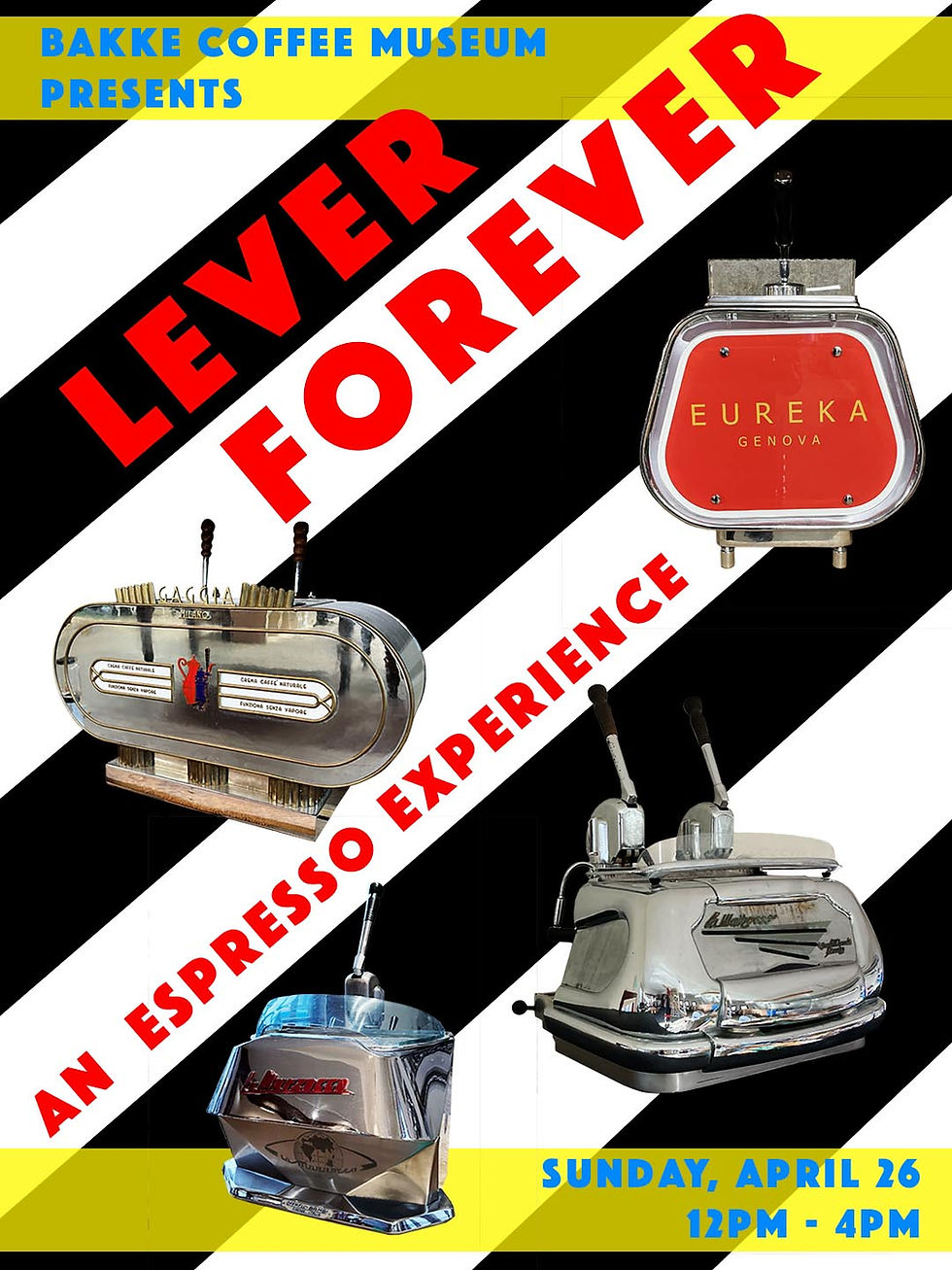
This month at the Bakke Coffee Museum we are celebrating all things lever machines and how they work. The amazing lever, that gave us espresso as we know it, and even gave us the term "pulling a shot"! Our month of levers will culminate on April 26th when we will be hosting an open house event showcasing several lever machines, both vintage and modern, operating and serving espresso shots.
The essence of espresso is truly embodied in lever machines, old and new, and the lever is the ultimate test of a barista's skill. Since it was Achille Gaggia, founder of the Gaggia company, who is credited with the invention of the commercial lever machine, we thought it appropriate to take on an early Gaggia lever as our next challenge on the workbench. An homage to Achille! But it turned out to not be as simple as we had thought. We continue to be amazed... you truly never know what you might find when you open up an old espresso machine. Read on to find out more...
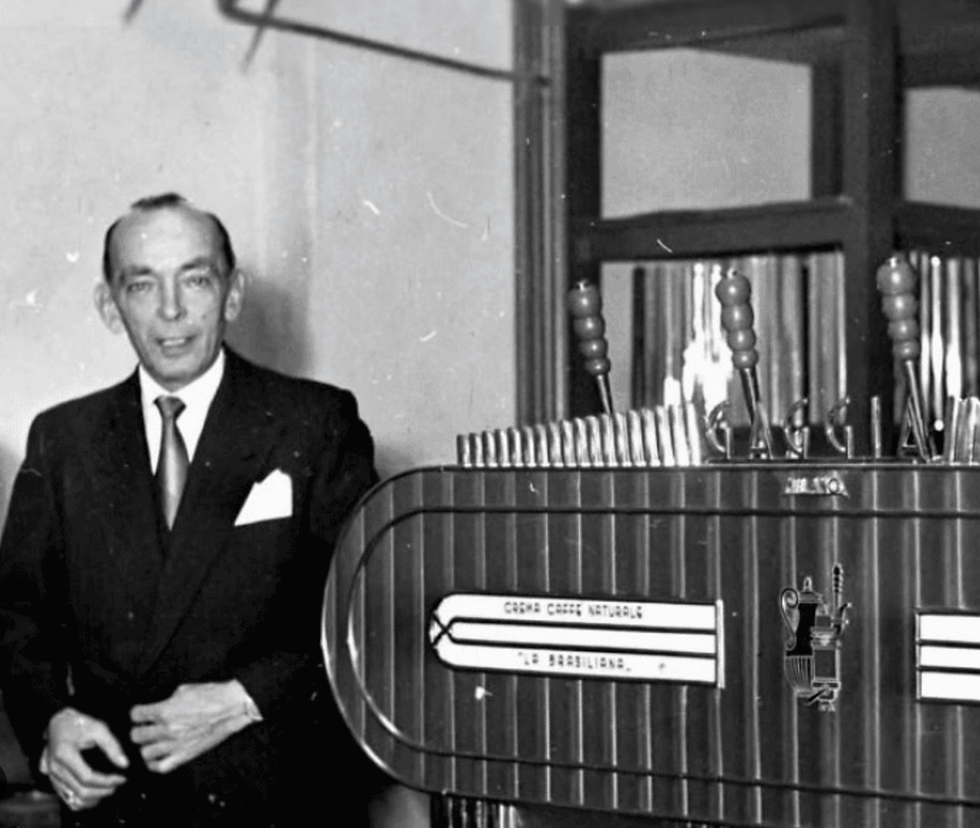
Achille Gaggia
Achille Gaggia stands out as one of the heroes in the history of espresso. His success in producing the first lever espresso machine resulted in the first time water was forced through ground coffee at 9 bars of pressure. (The vertical machines of the previous era only averaged about 1.5 bars, and the coffee they produced was more like that of a moka-pot.) The lever revealed a whole new aspect to the drink, a much more intense extraction than anyone had tasted before. It was the birth of crema! But how did this come to be? Gaggia was not the only one of his time pursuing a better tasting espresso, specifically through increased pressure, but the curiosity and persistence of this particular caffè proprietor propelled his ideas into reality.
Unfortunately, across the history of espresso, much information has been lost and must now be reconstructed. And who knows what might have happened if not for the disruptions of WWII and the devastation wreaked by the bombing of Milan. But we know this — in the 1930s Achille Gaggia operated a caffè called Bar Achille in Milan. He had a Victoria Arduino steam pressure machine on the bar, and he was not satisfied with the results. He thought that there must be a better way to prepare and enjoy coffee.
He soon found out he was not alone, someone else had been considering the problem already. A man named Antonio Cremonese had designed a screw-operated grouphead that would produce espresso at a higher pressure than the old vertical machines, without relying on steam pressure to force the water through the coffee. His idea was refined enough that he had taken out a patent for his invention. But Cremonese died shortly after completing his design. Some way or another, around that time Achille Gaggia had crossed paths with him in Milan or heard of his work, and ended up purchasing the patent rights from Cremonese's widow. Gaggia then took Cremonese's idea forward, and in the late 1930s began making and selling a new type of group called the Lampo, intended to be attached to existing espresso machines. The Lampo was also supposed to produce espresso at higher pressure, but as no surviving example exists (as far as we know), there is no way to know what kind of espresso it made. But we can assume it did not match Gaggia's aspirations because his search for a new method of espresso extraction at a higher pressure continued...

It was not long after the Lampo came into existence that the Second World War struck with full force. When life finally returned to normal, Gaggia continued his work. By this time he had abandoned simply making a grouphead attachment, instead designing and fabricating a completely new machine. The result was the Gaggia Classica, an espresso machine in the new horizontal format (an evolution that had occurred shortly before the war) with a unique boiler setup (a subject for another blog) and finally, the lever group.
The lever really did change everything. It set a new standard for what drinking espresso could be like, and revealed qualities of intensity and body to the drink that had not been possible before. The old steam-powered espresso machines were capable of some thin crema, but their espresso was nowhere near the richly topped espresso that came from the new lever machines. In fact, legend has it that some drinkers were at first wary of the crema, calling it scum on top of the coffee. For that reason the lever espresso machines of the 1950s often featured the words "Crema Caffè Naturale" and "Funziona Senza Vapore", to emphasize the luxurious feel and sweetness of the new espresso drink.
According to another legend, Gaggia's spring-operated lever was inspired by the pistons of American jeeps that drove the streets of post-WWII Milan. This is a rather murky, romantic idea. But regardless, the spring lever was something entirely new. The method of lever espresso quickly took hold, and other espresso machine companies soon began producing lever machines as well. In a short amount of time, lever machines began to replace vertical steam machines on the bars of caffès around Italy and beyond.
How the Lever Works
The brilliance of the lever is simple, although the construction of the grouphead is complex. As the lever handle is pulled down by the barista, the internal spring is compressed upwards, and hot water from the boiler is drawn into the grouphead chamber. When the lever is released, the spring pushes the hot water through the coffee at approximately 9 bars of pressure, which is still the standard today. The finely ground and compacted espresso in the portafilter provides the necessary resistance to the spring as it expands back to its original position. It is the balance between force and resistance that results in a delicious espresso shot. It is important that everything is done properly, otherwise the lever could snap back into place with dramatic force. There are plenty of stories of baristas being struck in the face by an improperly operated lever, which is why lever machines must be operated with caution!

Eventually pumps were employed to provide the same pressure as the lever, freeing the barista from the hard work of pulling down the lever all day. Now most machines found on the bars of caffès are pump machines. But lever machines, operated by a skilled barista, continue to make excellent espressos. This brings us back to where we started — why we wanted to taste coffee from an early Gaggia lever machine, in this case an elegant two group Internazionale model. So we jumped right in...
The Gaggia Internazionale Mystery
When we decided to put a two-group Gaggia Internazionale lever machine on the workbench as the next candidate for restoration and making coffee, we thought it would be a fairly straightforward task. In fact, judging the machine from the outside, we thought it might be almost as simple as plugging it in and checking the gaskets. It was in good shape externally, and apparently a pretty standard machine, from what we could see — two lever groups, the usual steam wand, hot water outlet, sightglass, etc. But there were a few unlikely details. One was a slight difference between the two groupheads, and there was also an unusual switch on the barista side of the machine. Small clues that this gorgeous but apparently standard form machine might not be so ordinary...
Right from the beginning, the machine was intriguing. As we began to take the machine apart, we discovered that the beautiful exterior of the Gaggia Internazionale fits together like an elegant puzzle. The decorative metal bars that form the edges between panels slide cunningly off, and they are actually what is holding all the pieces together! Then, after the pleasure of removing the exterior panels, the inside held something none of us expected to see — two completely separate systems for making espresso. Behind one grouphead was the basic single boiler that we had anticipated, but behind the other was a complex mystery.
Look closely... what is happening here?
So many questions. After a quick survey of other Gaggia restoration projects on the internet, and consulting some espresso machine experts and enthusiasts, we came to the conclusion that this is not a standard Internazionale model. As far as we know most Internazionales were made as single boiler machines. Maybe this one was made to test a concept, or perhaps a specially ordered machine? As we began to understand what was happening in the bizarre, left-hand (of the barista) system, we started to come up with some theories.
Our talented technician, Lars, took everything out for cleaning, and isolated the mystery system. Through this process we were able to confirm that the actual heating element for the water to make the espresso was located within the grouphead itself, much like wall mounted machines of the same era. Aside from the heating element, most everything else you see in the photos below comprises a contained, self-regulating system designed to produce the steam for the steam wand. The bronze component is a large float valve setting the limits for water and steam, and the giant coil, which wraps around the small boiler producing the steam, is a device to preheat water from the water line before it arrives at the actual heating element at the grouphead.
As Lars worked his way through the various components, he documented his findings through working drawings.
We are still wondering exactly why this machine was built to contain two completely separate systems for making espresso. The mysterious switch we first noticed on the front was to switch between one grouphead or the other, so that only one system would be operational at any given time. Was it possibly an energy saving method? A caffè might need the robust capacity of a boiler at busier times, but the in-group heating system of the secondary system could be operated on more of an as-needed basis, for example in the evening. Electricity was an expensive commodity in Italy at the time. Or maybe the whole thing was just an eccentric experiment. Regardless, how did this unique and seemingly one-of-a-kind lever machine end up here at the Bakke Coffee Museum? We may never know, but we are glad it did.
The machine restoration is still in progress, and we still have to taste coffee from it. There is a lot more work to be done... so stay tuned!
In the meantime, if you want to check out this curious espresso artifact, and taste some shots pulled from other vintage espresso machines, plan to come visit us on Sunday, April 26 to celebrate the legacy and continued relevance of lever espresso! We will have several machines pulling shots, including a 1950s La Marzocco Mondial and a Faema Veloxterma wall mount machine. We will also have the modern La Marzocco Leva in operation, as well as the classic Lapera made in Montreal, and the Pull espresso machine made right here in Washington State, with their designers here as special guests! Don't miss the chance to taste espresso from all of these beauties!
We hope to see you there! If you can, please RSVP here to help us plan ahead.
Cheers, Signore Gaggia! Grazie mille!


Comments